Presence versus erasure
The cave offers painless solace because it removes sequence and consequence. The story moves when the protagonist chooses discomfort, relationship, and demand.
Unpublished mythic-fantasy novel
Prelude and Chapters 1–4 · 32-page excerpt
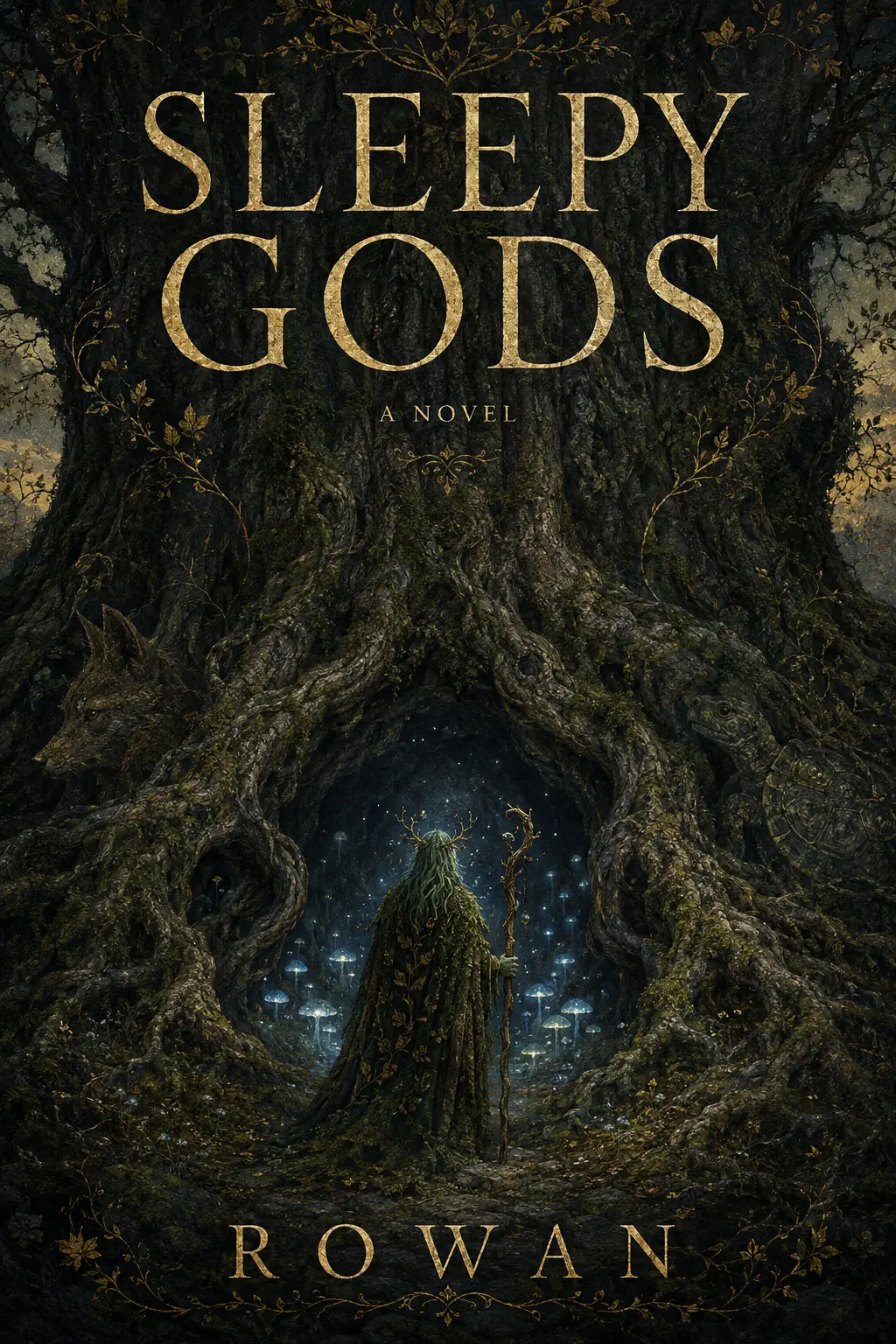
An ancient being wakes after an eon of self-erasure and must choose to remain present in the world he forgot.
RoleCreator and author; concept development, narrative foundations, character, worldbuilding, cultural lore, thematic and symbolic design, and prose
The project
Sleepy Gods is a lyrical fantasy novel about an ancient being who wakes after an eon of meditation with most of his identity and history missing. His first companion is the moss cloak that became conscious while waiting on his back; his first choice is whether to return to effortless solitude or reenter a world that kept changing without him.
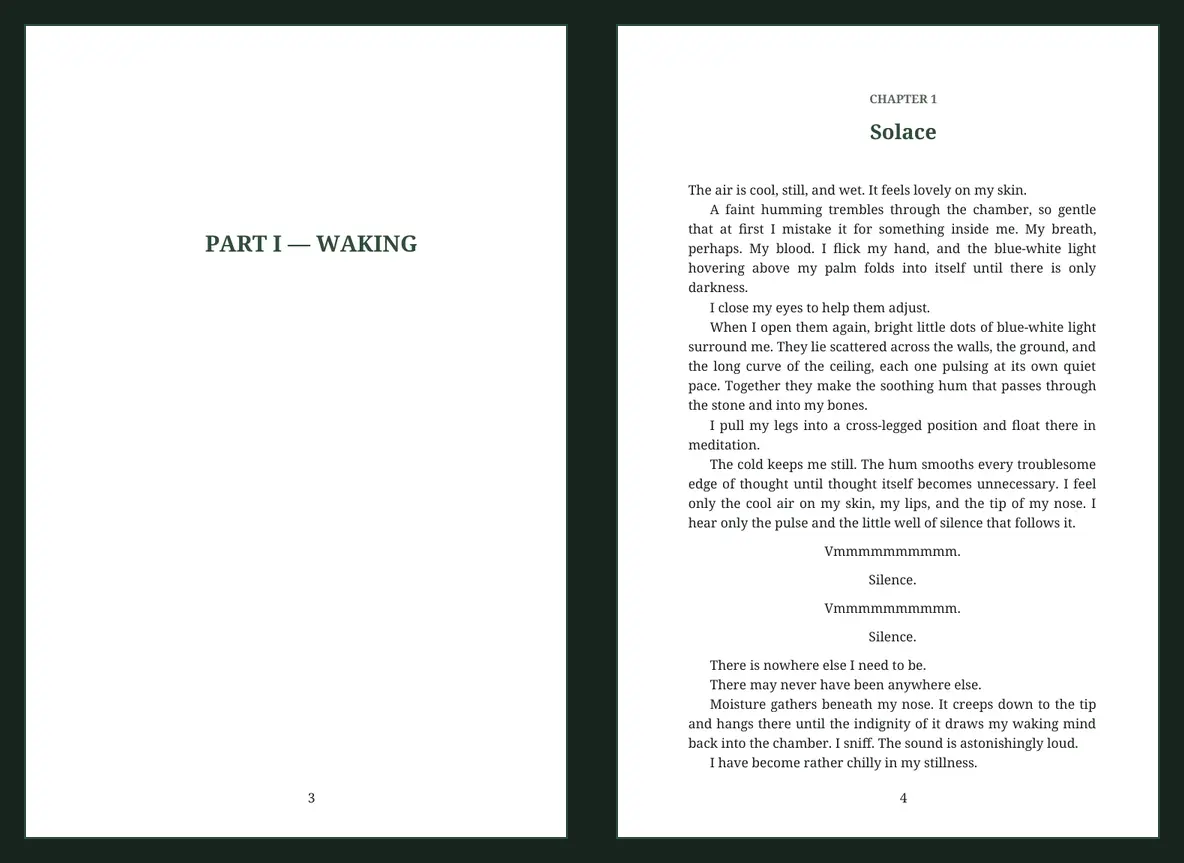
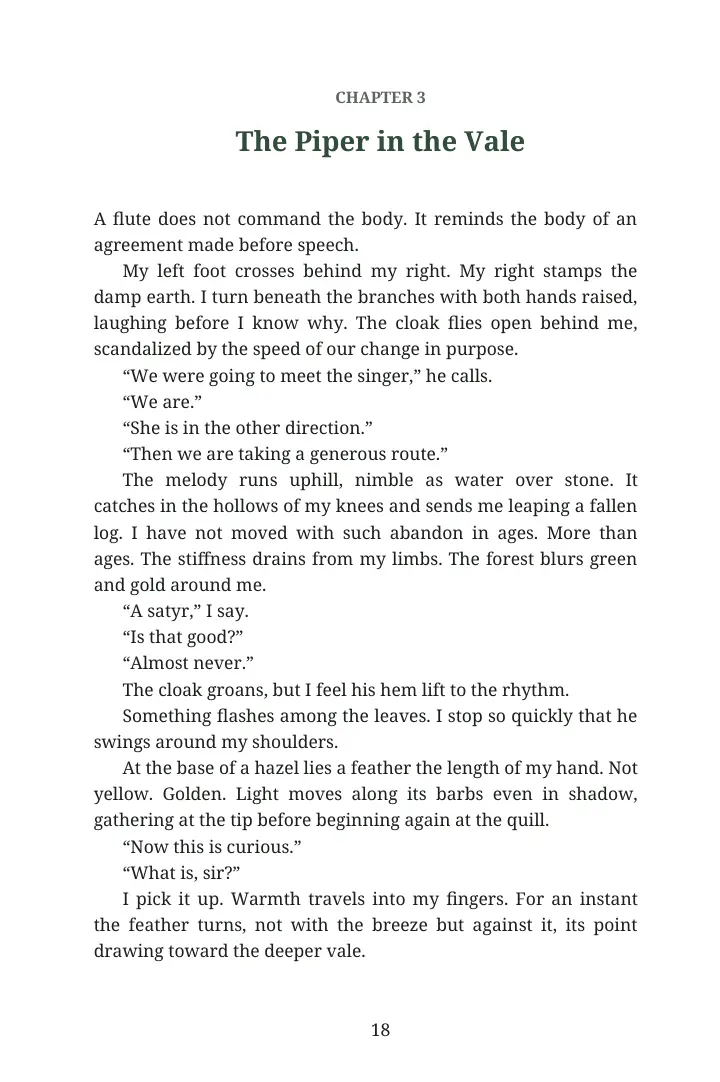
The first four chapters move through sensory awakening, comic companionship, a forest village sustained by generations of Givers, decades lost to avoidance, reunion with an old satyr friend, and the revelation of a white hush erasing roads, little gods, family names, and historical truth.
The excerpt establishes the world through intimacy rather than exposition. Humor, ritual, embodiment, and companionship carry a deeper story about avoidance, memory, consent, responsibility, and the difficult choice to participate in one’s own life.
My contribution
Design logic
The Prelude and first four chapters form a complete opening movement: awakening, companionship, departure, avoidance, reconnection, revelation, and a chosen step toward accountability.
The cave offers painless solace because it removes sequence and consequence. The story moves when the protagonist chooses discomfort, relationship, and demand.
Pell has answers but refuses to install a ready-made identity inside his friend. Truth matters, but love does not grant ownership of another person’s story.
Generations bring food and song to the cave without crossing its threshold. Their ritual reaches the protagonist while preserving his door.
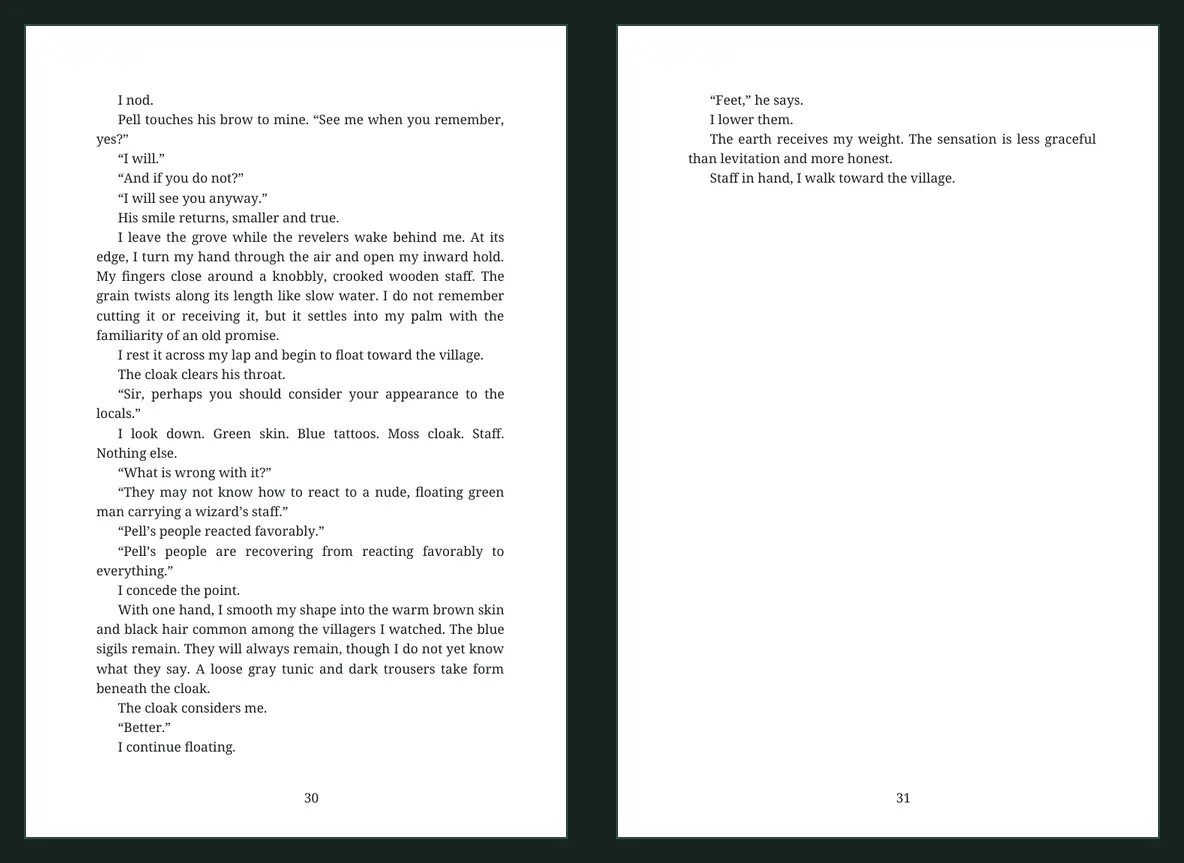
Eating, aching, dancing, sleeping near others, and finally placing both feet on the earth restore the protagonist more than abstract reflection.
Tools used
Every mystery is grounded in a choice between painless withdrawal and accountable presence.
The opening escalates from solitary awakening to living companion, mortal culture, old friendship, erasing force, and witness-led journey.
The protagonist, cloak, and Pell have distinct voices, boundaries, vulnerabilities, needs, and relationships to memory.
An animistic world of spirits, tree-settlements, living objects, embodied magic, deep time, and endangered gods emerges through experience.
Pell’s vigil, generations of Givers, the elm’s record, and disappearing names make history active in the present.
Cave and world, floating and walking, forgetting and witnessing, solitude and companionship repeat the same central conflict.
Shell, cave, white spear, song-pause, golden feather, elm rings, cloak, staff, and grounded feet carry plot and theme together.
Fungal stillness, forest wonder, comic companionship, revelry, temporal grief, and metaphysical danger coexist in one lyrical register.
Key decisions
The cloak prevents the opening from becoming a solitary information sequence and immediately gives its metaphysics interpersonal consequences.
The Giver sequence makes immortal avoidance visible by letting an entire human life pass during one delayed conversation.
Pell uses music, food, wine, touch, sleep, laughter, and restraint to help his friend remember that having a body differs from carrying one.
The protagonist lowers his feet, accepts the weight of the earth, and walks toward the first witness.
Open the work
The portfolio excerpt contains the Prelude and Chapters 1–4 of the unpublished novel—thirty-two pages in total.
Credits & scope
Created and written by Kyle Figard.
Originally developed under Rowan, another pen name of Kyle Figard.
Content note: brief fable violence and blood; grief, death, memory loss, existential distress, non-explicit nudity, alcohol, and affectionate communal revelry.
Next project